Technology designed for operational accuracy and reliability
Syroco combines physics-based modelling, high-frequency data and AI-driven optimisation to deliver recommendations that can be trusted in real maritime conditions.
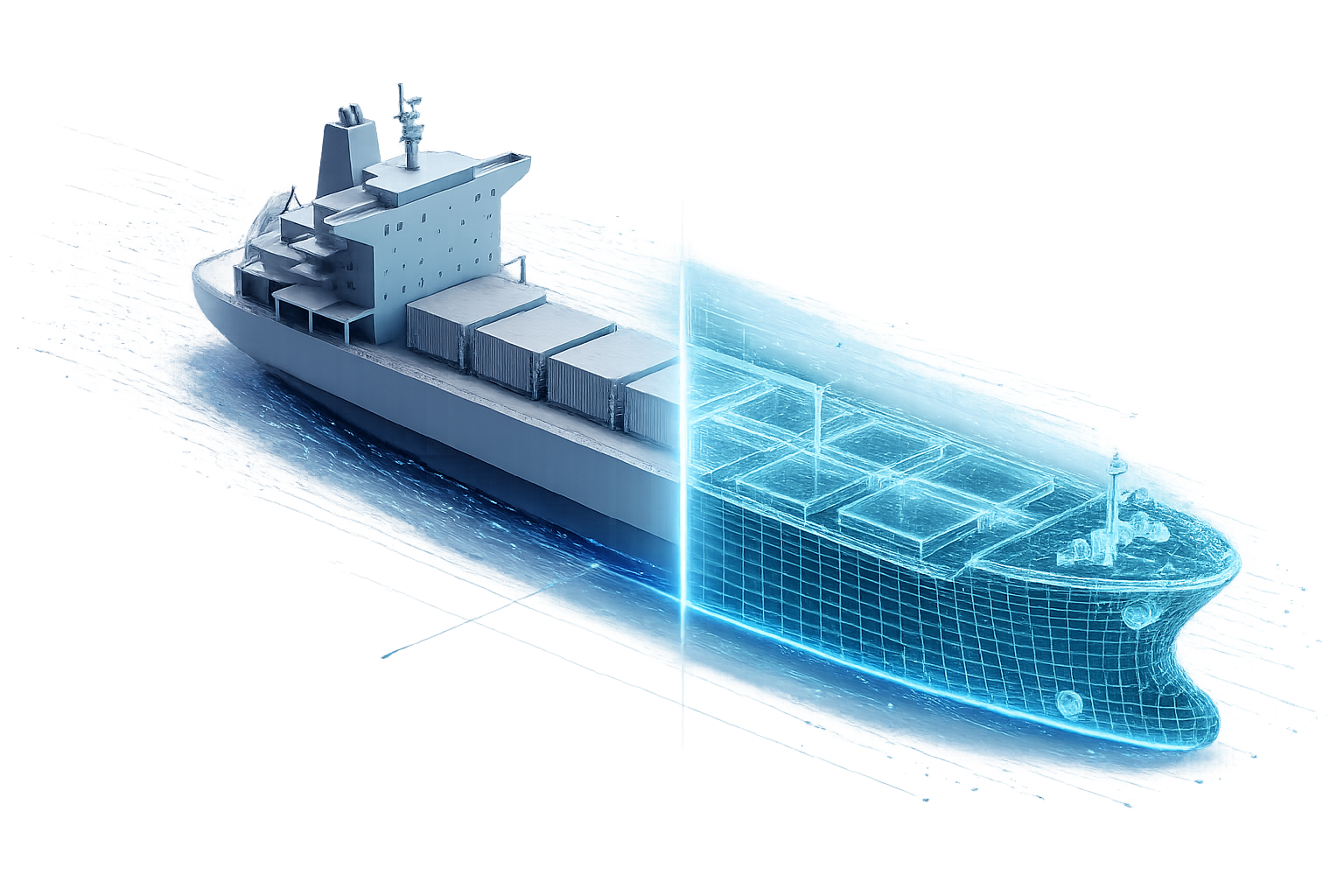
A ship-specific digital twin
Syroco builds one calibrated digital twin per vessel. Each digital twin is grounded in hydrodynamic and propulsion physics and represents the real resistance, propulsion efficiency and energy consumption of the ship at sea. Models are continuously recalibrated using real voyage data and onboard sensor measurements, ensuring that optimisation reflects the true behaviour of each ship over time.
This means the twin captures the actual impact of hull fouling, engine degradation and loading conditions - not design-stage assumptions or class averages.
Actual Data
Live Updates
Ship Specific
Accurate Models
Physics-based core, enhanced by data and AI
Deterministic physics models form the core of the optimisation engine, providing robustness and explainability.
Physics foundation
CFD-based hull resistance, propulsion modelling, added resistance from waves, wind and currents
AI calibration
Machine learning refines model parameters using real voyage data, improving accuracy beyond what design-stage physics alone can deliver
Explainable optimisation
Millions of voyage scenarios evaluated under real constraints - no black-box routing decisions
High-fidelity weather and metocean intelligence
Voyage optimisation relies on global and regional numerical weather prediction models, covering wind, waves, swell and currents along the route. Environmental conditions are time-evolving and continuously refreshed during the voyage. These inputs are tightly coupled with ship response models, allowing Syroco Live to assess the real impact of weather and sea state on performance.
Large-scale voyage simulation and optimisation
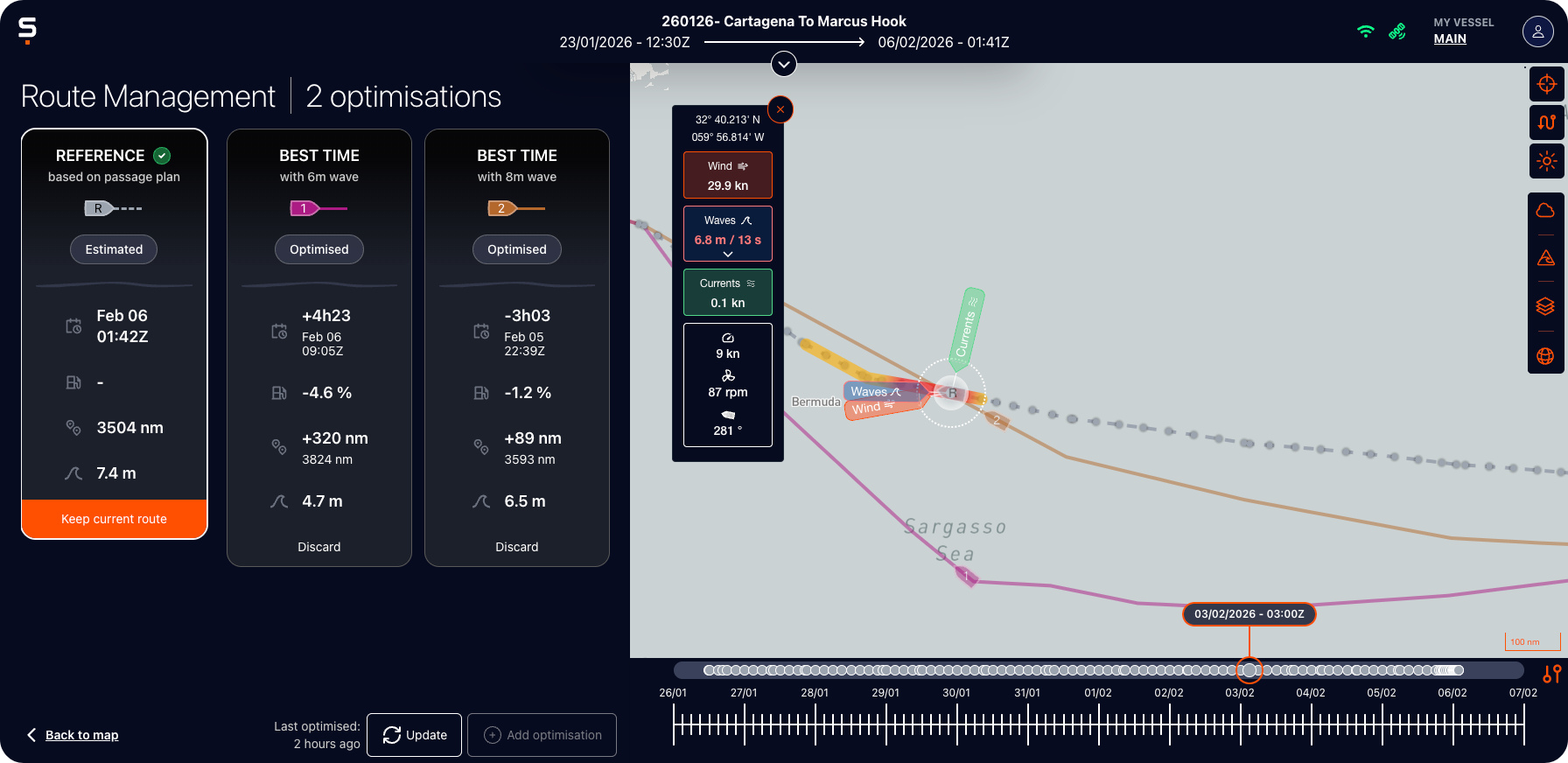
Syroco runs high-throughput, cloud-based simulations to evaluate large numbers of possible routes, speeds and power profiles. Multi-objective optimisation balances fuel consumption, ETA, safety and regulatory or commercial constraints. Operational limits, no-go areas and seakeeping criteria are integrated by design, ensuring that recommended solutions are feasible in practice, not just optimal on paper.
Wind-Assisted Propulsion integration
For vessels equipped with wind-assisted propulsion systems (WAPS), Syroco integrates the WAPS performance model directly into the digital twin. The optimisation engine accounts for sail or rotor contribution when planning every voyage - choosing routes that maximise the benefit of both engine and wind together.
Syroco has implemented integrations with over 10 WAPS technology providers, including Norsepower, Bound4Blue, Econowind and others. Each integration uses the provider's own performance data to model sail contribution accurately under real conditions.
Built for operational trust
Explainable recommendations as to why a route or speed is suggested
Safety margins embedded at every stage of the optimisation process
Performance tracked and verified to ensure results are measurable and auditable
Talk to our engineers - see the technology behind the recommendations

.png?width=2000&height=1116&name=Design%20sans%20titre%20(46).png)


.png?width=200&height=36&name=Design%20sans%20titre%20(44).png)



.png?width=300&height=300&name=1%20(29).png)
.png?width=289&height=289&name=1%20(30).png)
.png?width=289&height=289&name=Image%20website%20(2).png)